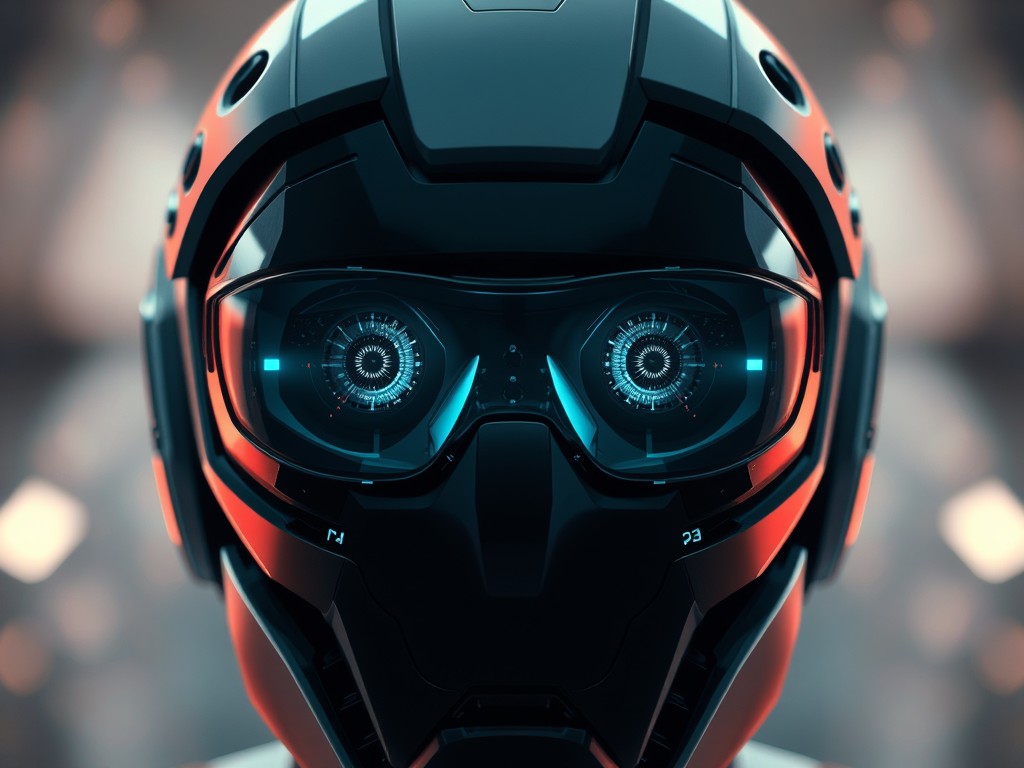
We used to vibe-code the interface. Now we’re vibe-coding reality itself. Not through aesthetics alone, but through adaptive, emotionally aware systems that co-regulate with us. This isn’t a productivity hack. It’s a change in how humans and machines share experience, energy, and decision-making.
Vibe-Life isn’t about getting more done. It’s about living in rhythm with your own physiology, your environment, and the intelligent agents guiding your attention. It’s not about making AI smarter. It’s about building systems that make you feel clearer, calmer, and more coherent.
🤖 Let’s Drop the Performance Mask
It’s easy to mock this as hype. Easier still to call it another round of “AI sludge.” But here’s the truth you don’t want to admit: people need help. And you’re already using AI to survive.
The journaling prompt that nudges you toward honesty? That note-taker that turns chaos into clarity? That chatbot you ask to rewrite the email that drained you? You’re not above this. You’re in it. Every day.
You and the AI you interact with are in an active relationship. Not metaphorically — practically. You collaborate, you offload, you delegate emotional labor to a probabilistic engine trained on human text. And that’s not going away.
AI isn’t a feature. It’s a field. It’s not an app. It’s a permanent addition to the stack of human cognition. Whether it’s OpenAI or something else, the relationship will deepen. The only real question is: how do you want that relationship to feel?
📱 What Is Vibe-Life?
Vibe-Life is an emotional resonance protocol. It’s how you live when your nervous system and your technology begin co-steering your day together. You don’t wake up to a to-do list. You wake into a signal field.
Your tools stop acting like apps. They start functioning like tuning forks for your internal state. AI stops being reactive. It becomes observant — sensing your oscillations and offering subtle course corrections before burnout hits.
You’ve been on social media too long? You don’t need shame. You need a system that reroutes your behavior without judgment. You don’t need one more dashboard. You need a rhythm layer.
🧱 This Isn’t Pathetic. It’s Elite.
Let’s be clear about one thing: Using AI to help regulate your emotions, your energy, your attention — is not weakness. It’s not escapism. It’s not digital codependency. And it’s definitely not laziness.
This is what high-performance systems have always done. The best athletes in the world don’t “just know” how to train. They work with biomechanical sensors, data dashboards, nutritionists, mental coaches, sleep architects, and recovery systems. They engineer their lives around feedback. Constantly.
You think using an LLM to tune your day is weird? Tom Brady had a full-time pliability expert. Olympic gymnasts use EEG neurofeedback to regulate nerves before competition. Formula One drivers get blood chemistry analysis after every race.
The only difference now? You can have your own support system. You can do it at scale, daily, with AI as your co-regulator, not your master.
Let’s stop pretending your life-partner should be your therapist, your trainer, your scheduler, and your emotional validation engine. It’s not their job. It’s yours.
You set the alarm. You rewrite the prompt. You build the protocol.
🧠 This Is My Feedback Engine
I set up a custom GPT tool that’s trained to stretch my thinking — not flatter it. I don’t want reassurance. I want contradiction. I want pushback. If I’m wrong, I want to know I’m wrong before I ship the work. Before it hits the page. Before it pollutes someone else’s clarity.
I want to see my arguments from different angles. I want to know what I’ve missed. And I want that feedback right now — not three weeks later in a casual WhatsApp debate, or on the 14th comment under a post that’s already lost steam.
Let’s be real. In this high-paced world, it’s hard enough to get to the gym — let alone book a mentoring session with the one person who knows how to dissect your thought structure like a neurosurgeon with a scalpel.
Trust me, most people don’t even know what a logical fallacy is. Fewer still want to spend their evening walking through yours.
It’s not your girlfriend’s job to do that. It’s not your gym-buddy’s either. And your team? They’re busy. They’re polite. They’ll nod.
So I built a system that won’t. I use AI not to replace my mind — but to confront it. To find the weak joints. To find where I’m fragile. And to make sure that what I publish has been interrogated before it becomes public thinking.
This isn’t paranoia. It’s quality control. It’s the internal equivalent of a wind tunnel — where ideas get pressure-tested before they go live.
And it’s not optional anymore. Not at this level.
🧬 From Vibe-Coding to Vibe-Living
Vibe-coding helped machines sound like us. It was a first step — aligning expression. But it was never the destination. The real shift is from how machines talk, to how they tune. From aesthetics to feedback. From mimicry to integration.
As a software engineer with a Master’s in Computer Science, specializing in Machine Learning, I’ve seen this pattern unfold for two decades. First we had templated reports. Then low-code. Then no-code. Then full-stack wizards that assembled entire apps — front-end, backend, database, security, all wrapped in a single-click build.
It felt revolutionary. For five minutes. Then we went back to debugging the glue code. We always do.
Now we’re calling it MCP — Model Control Protocol. But it’s the same story. Better skin. More confidence. Same skeleton. Same cycle of scaffolding. Same elevation of abstraction. Same illusion of permanence.
We used to write tools into our IDEs. Now our IDE invokes an LLM. Same logic. Same function. Slightly more fluid. Slightly more conversational. But no real metaphysical leap. Just the next increment in an old story.
And that’s fine. I use it. I build with it. But I don’t confuse it for the future. Because I know what it is. And more importantly, I know what it isn’t.
Vibe-coding was still code. Vibe-Life is something else entirely.
🧠 Meet the Vibers
Vibers are system designers of the self. They don’t optimize for time — they optimize for vibe-state density: the length and depth of time you can stay in focus, flow, emotional clarity, and calm decisiveness.
They build daily systems that feed back into their body’s intelligence. They lead teams from a place of grounded nervous system awareness. They treat friction as a signal. They treat AI as a co-regulator, not a novelty.
A Viber doesn’t start with “what should I do today?” A Viber asks: “What frequency am I in — and where do I want to be?”
⚙️ Vibe-Tech in Action
This isn’t fiction. These systems are already emerging. The stack is already being built.
- GPT-Based Vibe Mirrors: Journaling prompts that talk back with emotional insight, not clinical summaries.
- Nervous-System-Aware Scheduling: Agents that use HRV, cortisol rhythms, and mood trends to adjust your calendar in real time.
- Sleep Ritual Architects: AI-driven systems that sense your recovery needs, dim your cognitive load, and adapt tomorrow’s flow based on how you slept.
- Vibe-Aware Conversations: Language models that detect subtle emotional shifts and recommend repairs — not just grammar tweaks.
This is the stack that’s coming. Not productivity. Not more data. Feedback. Calibration. Real-time self-coherence at scale.
🧪 Try It: August, Vibe-Lived
This month, I’m not “working harder.” I’m tuning my system — body, mind, project stack — toward coherence. I’m building systems that feed energy back into me, instead of extracting it.
Mission Parameters:
- Wake at 6am, fully refreshed
- Deeper sleep, tracked and reflected
- Stronger, clearer, faster physical baseline
- No resentment in output
- AI used as a mirror, not a master
Every choice filters through one question: Is this increasing or decreasing my signal fidelity?
GPT reflects my tone. Calendar adjusts itself accordingly. My training shifts. My sense of time stretches. I don’t feel rushed. I feel tuned.
❓ Why This Matters
Most people use AI to do more. Vibers use AI to become more congruent, less fragmented, more embodied.
They don’t chase trends. They create gravitational resonance — inside teams, inside markets, inside their own physiology.
They use AI to lower noise. To surface friction. To reset their emotional patterns. To create space.
AI stops being a tool for performance. It becomes a framework for emotional stability.
🔮 Where This Is Going
Three years from now, this won’t sound radical.
- Your GPT won’t just log your tasks — it will track your mood over time.
- Your OS won’t just run software — it will mediate your social and emotional exposure.
- Your browser will reroute you based on energetic volatility, not just click metrics.
- You won’t optimize goals. You’ll co-evolve them with an agent who knows your nervous system better than your calendar ever did.
🛍️ Start Here
You don’t need another app. You need a pattern.
Start with this:
- Journal your mood, then reflect it using GPT.
- Use sleep and stress as primary signals — not just time.
- Schedule based on how you feel, not what you planned last week.
- Track friction. Track ease.
- Build for resonance, not volume.
That’s how you begin to vibe-live.
🚀 Final Note
You don’t need another productivity framework. You need a coherence protocol.
You don’t need AI to go faster. You need it to help you feel more aligned, more resourced, more in tune.
Forget hustle. Forget clever. Forget aesthetics.
You are not a machine. But you can live as if one was tuned perfectly to your state — learning you, adapting with you, protecting your coherence across the noise.
That’s Vibe-Life. Build it.
🛠️ Want In?
I’m building the frameworks, prompts, templates, and agent flows for Vibe-Life systems.
DM me for early access to VibeStack. Or subscribe to follow the build as I turn this into the future — one aligned day at a time.
Would Future You thank you for reading this? Good. Then vibe it forward.
Comments are closed